In 1945, an American Army surgeon stationed in Manila is said to have assisted the wife of one of the Philippines’ most important painters. According to family history passed down for three generations, that act of care led to a gift: a painting the artist had hidden away during the Japanese occupation, retrieved once it was safe, and given to the surgeon as a thank you.
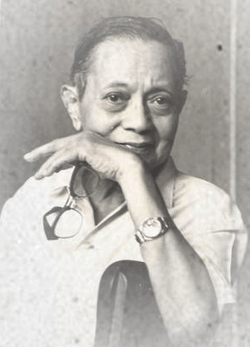
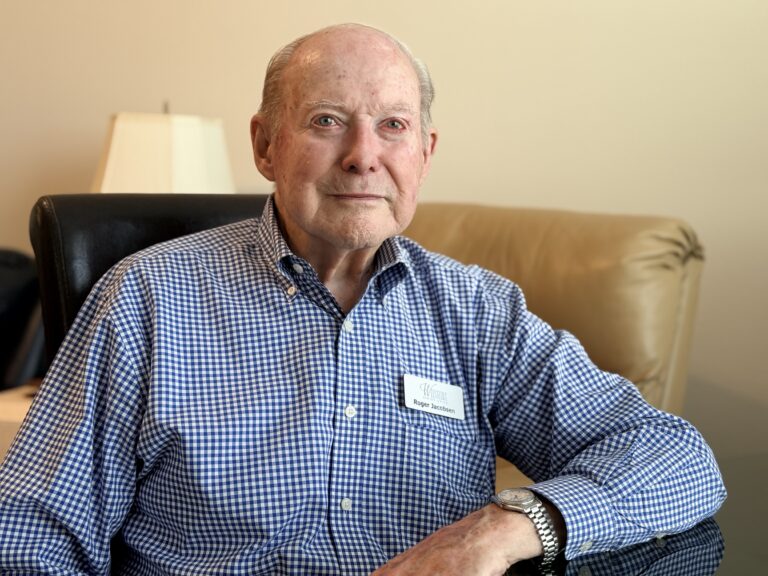
That painter was Fernando C. Amorsolo, the first artist ever named a National Artist of the Philippines. That surgeon was Dr. Darrell O. Overpeck, an orthopedic surgeon attached to the 49th General Hospital on Luzon. And this September, two of Amorsolo’s paintings that descended through Dr. Overpeck’s family will return to the Philippines, where they will be offered through Salcedo Auctions in Manila on behalf of Blue Box Auction Gallery in Norfolk, Virginia, carrying that story with them.
Who Was Fernando Amorsolo
Fernando Amorsolo (1892 to 1972) is considered one of the central figures in Philippine art history. He is best known for luminous scenes of rural Philippine life: farmers in the fields, harvest celebrations, folk dances, and figures moving through natural, backlit sunlight. His portrayals of the countryside have long been described as true reflections of the Filipino soul, and his work helped define how the Philippines saw and presented itself, both to its own people and to the world, in the first half of the twentieth century. Today, his paintings are best understood in the context of modern Philippine and Southeast Asian art rather than as contemporary work, a distinction that matters to collectors evaluating where these pieces sit in art history.
The Two Paintings
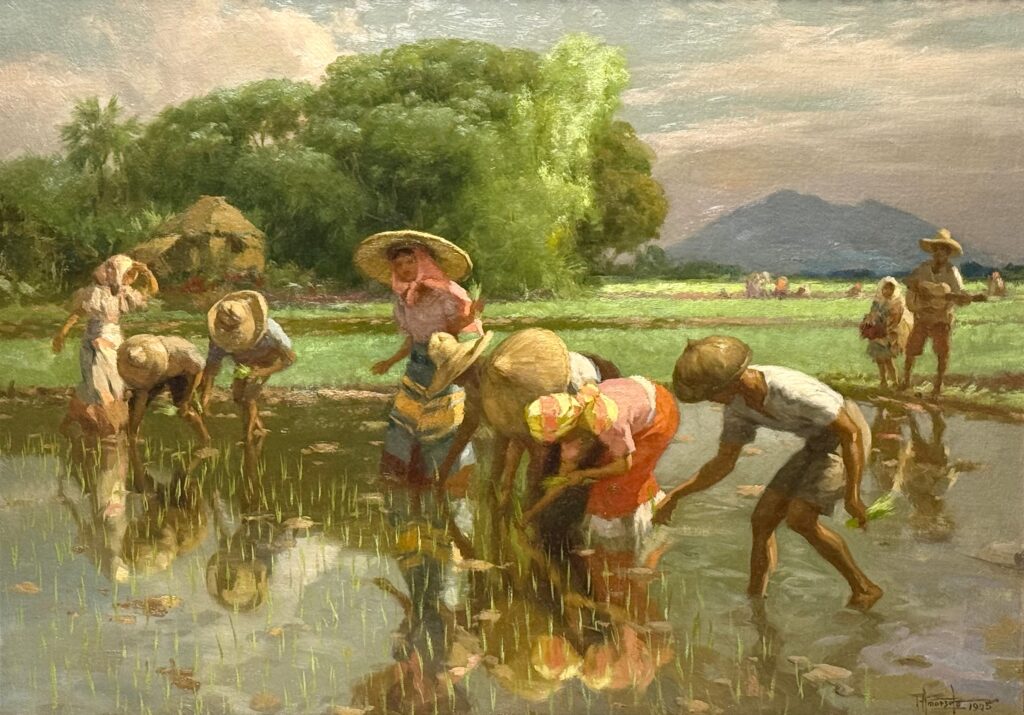
Planting Rice, 1945 shows a row of rice planters moving through a flooded paddy, their labor set to a quiet rhythm of light, water, and reflection. Field workers, distant figures, thatched huts, trees, and mountains all reinforce Amorsolo’s celebrated vision of rural Philippine life. It is one of his most recognized and sought-after subjects: agricultural labor rendered with dignity and warmth, in a style that once appeared on posters and tourist materials and helped shape the visual identity of the Commonwealth of the Philippines. The work is signed and dated lower right, “F. Amorsolo 1945.”
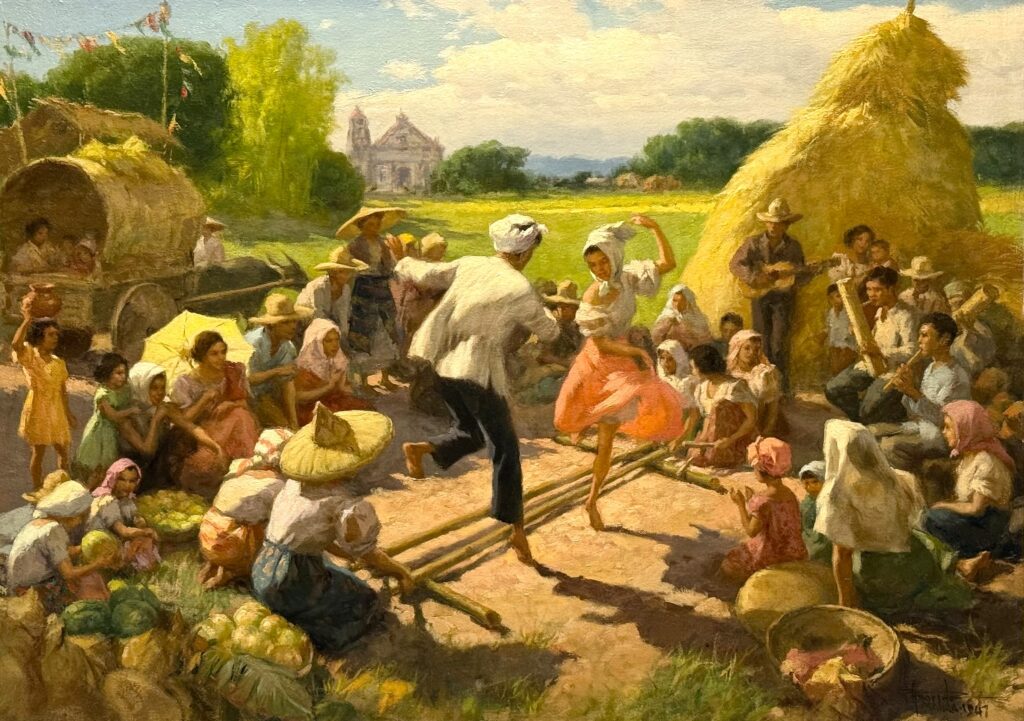
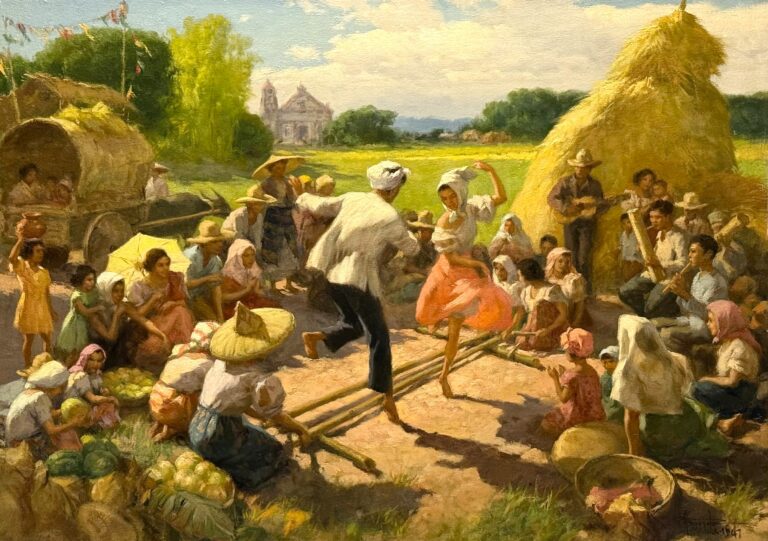
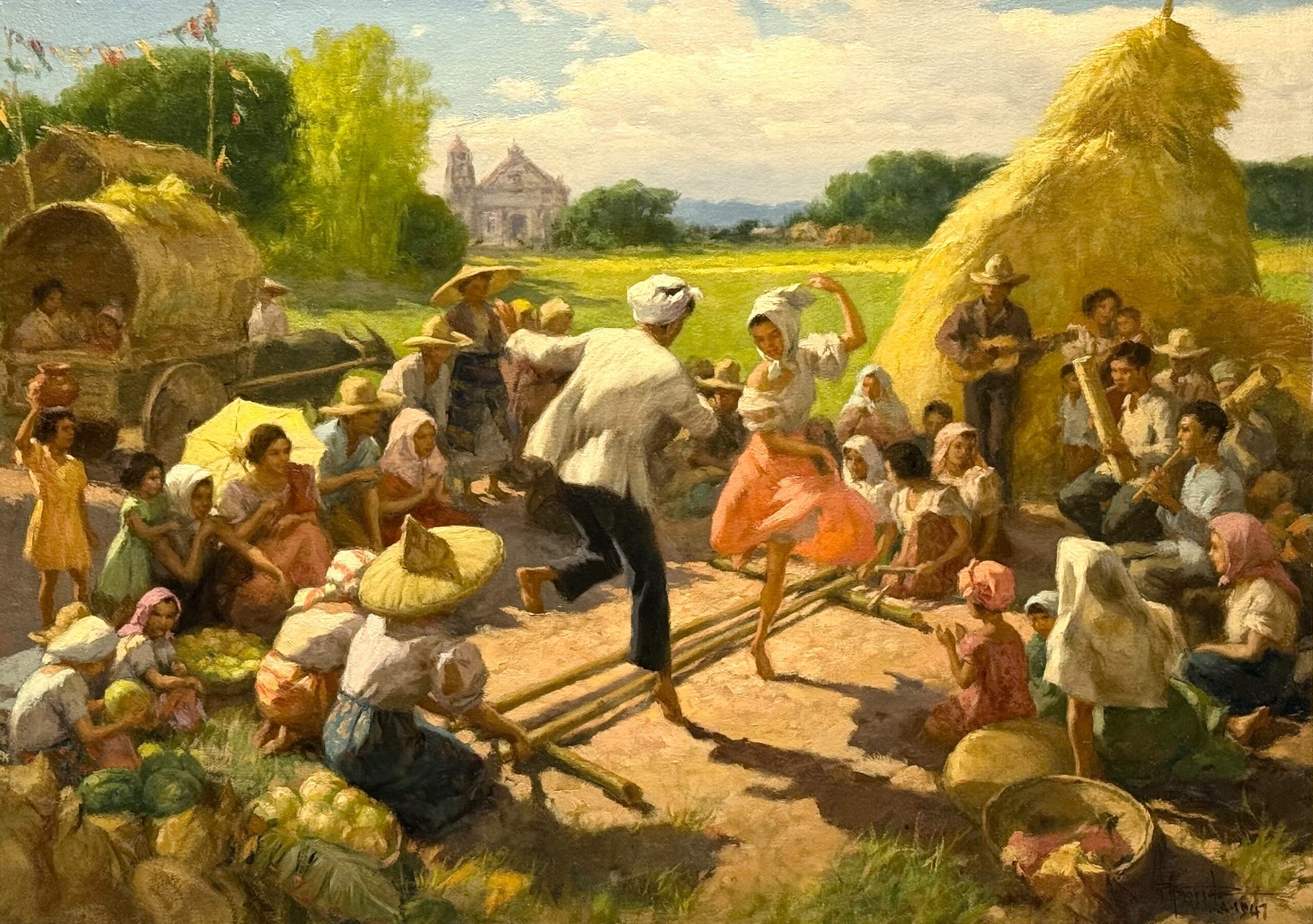
The Tinikling Dance, 1947 captures a harvest celebration built around a young couple performing the tinikling folk dance, surrounded by villagers, musicians, children, produce baskets, and haystacks under open sunlight. Folk dance, rural abundance, music, and community come together in one composition, all hallmarks of Amorsolo’s most celebrated work. It is signed and dated lower right, “F. Amorsolo Manila 1947.”
Both paintings have been authenticated by the Fernando C. Amorsolo Art Foundation of Quezon City and reviewed by Sylvia Amorsolo Lazo, the artist’s daughter and former apprentice. Blue Box Auction Gallery gratefully acknowledges the Foundation and Mrs. Lazo for their authentication review and assistance.
A Wartime Connection, Told Through Family History
The provenance behind these paintings is unusually personal, and Blue Box has been careful to present it exactly as the family has: as family history, not as independently documented fact where that distinction matters.
According to a sworn affidavit provided by the consigning family, Dr. Overpeck served as an orthopedic surgeon in the United States Army during World War II, with service in the Pacific theater that included New Guinea and the Philippines. He was attached to the 49th General Hospital on Luzon, which operated out of the Manila Jockey Club, and family documentation connects him to a Bronze Star Medal for his service in the Philippines.
Family history holds that while serving in Manila, Dr. Overpeck assisted one of Fernando Amorsolo’s wives. After the war, Amorsolo is understood to have retrieved paintings he had hidden during the occupation and given one to Dr. Overpeck in gratitude for that assistance.
Which painting that was is not confirmed. The only support within the family for the belief that it was Planting Rice is a photograph showing a painting displayed prominently in the family home, a photograph the family has shared with Blue Box. What is better documented is what happened next: after Dr. Overpeck returned to Fresno, California, he corresponded directly with Amorsolo, and that correspondence led to the acquisition of one or more additional paintings straight from the artist. Both works passed by descent through the family for generations, and this sale is understood, according to family history, to be the first time they have been offered publicly since they left Amorsolo’s hands.
A Hampton Roads Connection
The paintings have been in Hampton Roads and belong to a Virginia Beach family, the descendants of Dr. Overpeck. Blue Box Auction Gallery, based in Norfolk, is representing the collection on the family’s behalf, which means that for eight decades, a piece of Philippine national art history and a piece of American wartime history have sat quietly in coastal Virginia, far from the country where they were painted
Coming Home to Manila
Rather than sell the paintings from Virginia, Blue Box is sending them home. The sale will be facilitated by Salcedo Auctions in Manila, putting the works back in front of the market, the collectors, and the cultural institutions that know Amorsolo best. It is a fitting return: two paintings that left the Philippines through a wartime friendship, quietly kept for three generations by an American family, are now going back to find a new owner in the country where Fernando Amorsolo painted them.
The Auction
Planting Rice and The Tinikling Dance will be offered through Salcedo Auctions in Manila on September 12, 2026, on behalf of Blue Box Auction Gallery. It is a rare presentation: two authenticated Amorsolo works, from the same wartime American family collection, each with its own story but linked by a single act of kindness in a Manila hospital eighty years ago, now returning to the city where that story began.
For collectors of Philippine and Southeast Asian art, the appeal is straightforward. Authenticated Amorsolo paintings of this caliber rarely appear on the market, and rarer still are two from the same family, with a documented chain of custody stretching back to the artist himself. For those drawn to the history, the paintings offer something else: a tangible link to the Pacific theater of World War II, told not through official records alone but through the objects a family chose to keep, display, and pass down for three generations.
Interested in previewing the paintings, requesting the condition report and family affidavit, or learning more about the September 12 auction in Manila? View the full lot listings for Planting Rice and The Tinikling Dance, or contact Blue Box Auction Gallery directly.