Two Amorsolo Paintings Return to Manila and Sell for a Combined PHP 54.9 Million ($889,700 USD)
A wartime kindness in a Manila hospital, a painting hidden from the Japanese occupation, and eighty years later, a record-setting homecoming sale.
Published: September 15, 2026
The story started with a wartime kindness in a Manila hospital and a painting hidden from the Japanese occupation. It ends, for now, with a gavel in Manila and a result that surprised even the people who knew the paintings best.
On September 12, 2026, Planting Rice and The Tinikling Dance, two paintings by Fernando C. Amorsolo that had been kept by a Virginia Beach family for three generations, were brought to auction in Manila by Blue Box Auction Gallery, co-presented with Salcedo Auctions. Both paintings sold well above their estimates, closing out a journey that carried them from occupied Manila to Fresno, to Hampton Roads, and finally back to the Philippines under Blue Box’s guidance.
The Results
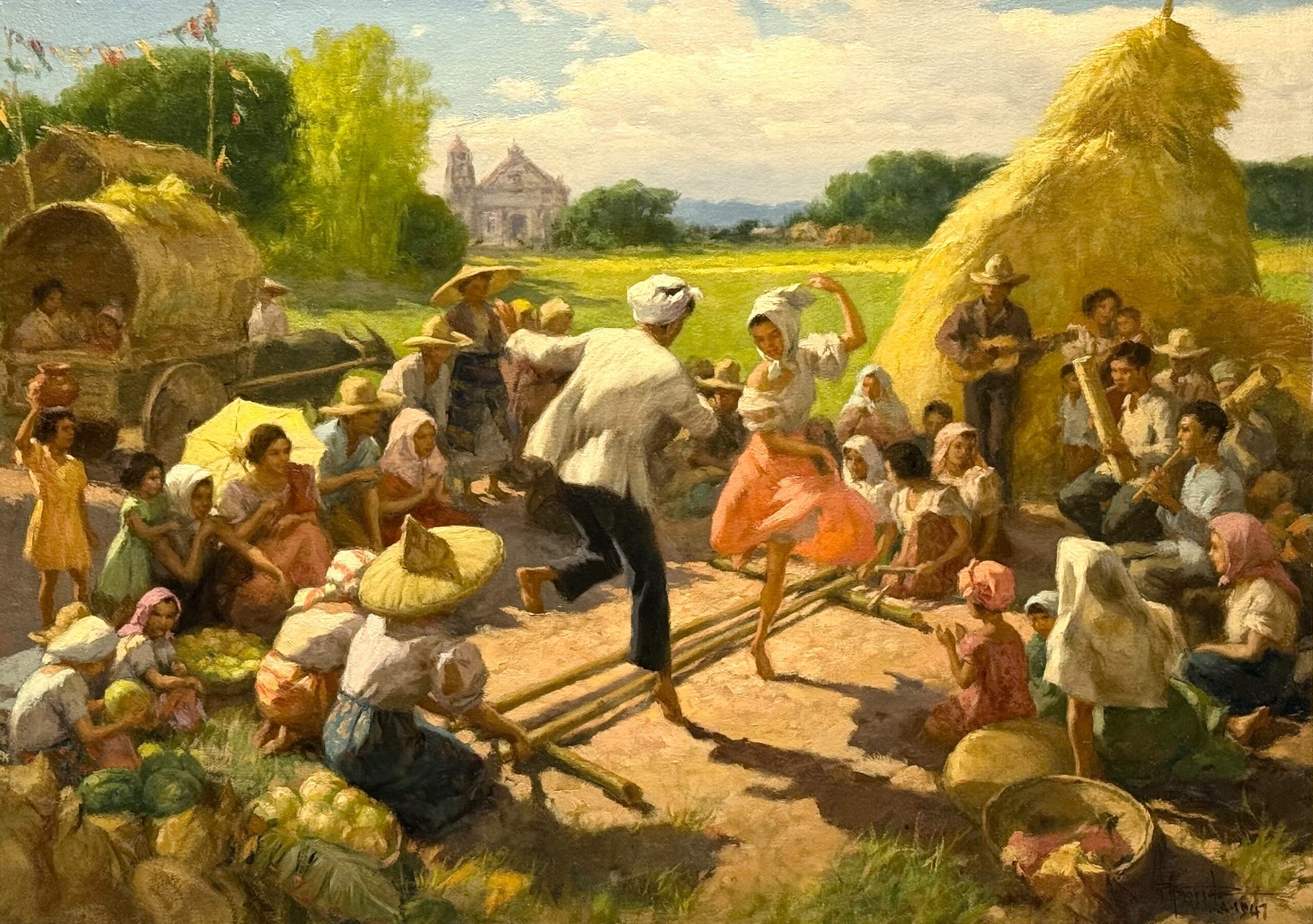
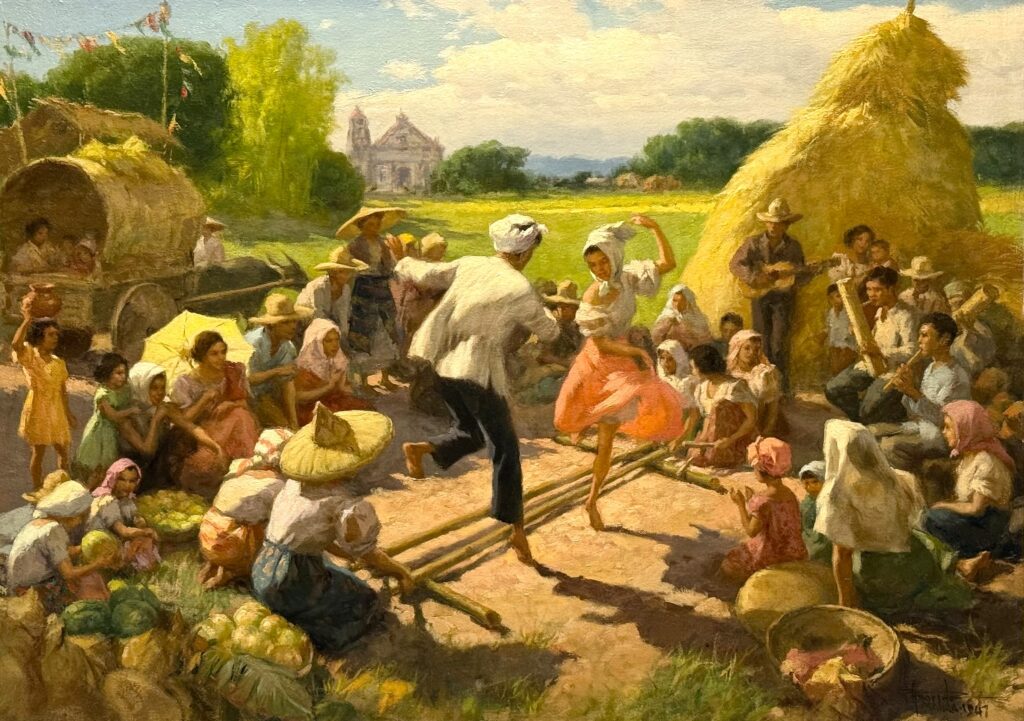
The Tinikling Dance, 1947 was estimated at PHP 8,000,000 to 10,000,000. It sold for PHP 38,544,000 (approximately $624,700 USD), nearly four times its high estimate and the highest grossing lot of the entire auction. The painting’s scene of a harvest celebration and folk dance, rendered in Amorsolo’s signature sunlight, proved to be the standout of the two, and one of the strongest results for the artist this year.
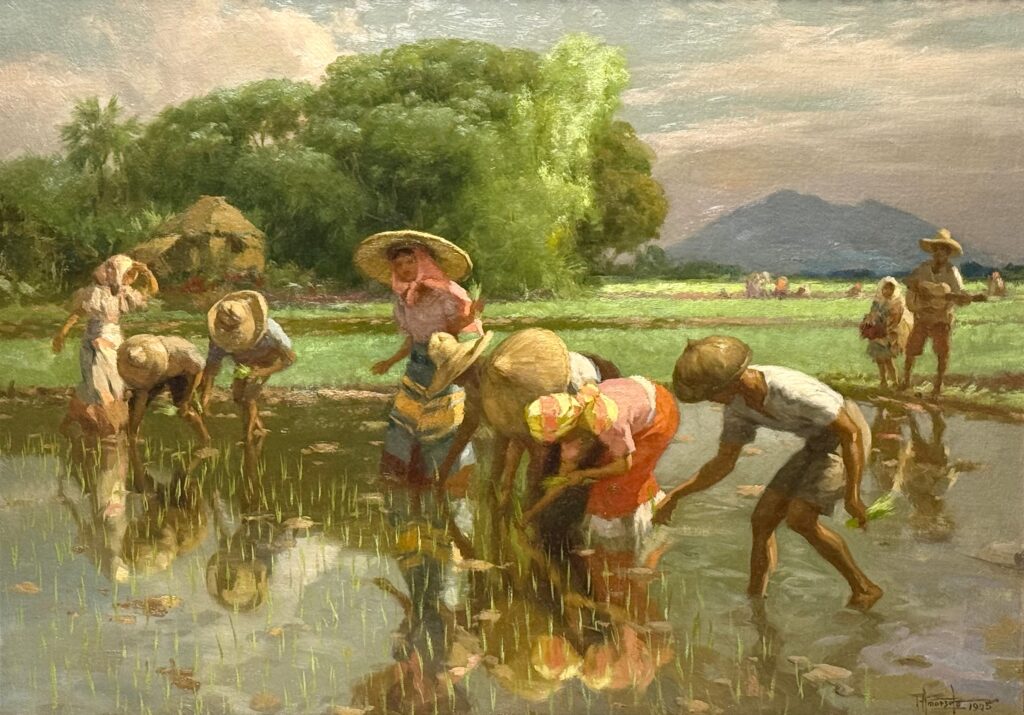
Planting Rice, 1945 was estimated at PHP 8,000,000 to 10,000,000 and sold for PHP 16,352,000 (approximately $265,000 USD), more than 1.6 times its high estimate.
Together, the two works brought a combined PHP 54,896,000 (approximately $889,700 USD), against a combined high estimate of PHP 20,000,000. For a collection that had never before been offered publicly, the results reflect both the strength of the current market for Amorsolo and the pull of the paintings’ story.
Fernando Amorsolo, Planting Rice, 1945. Oil on canvas on board, 35 x 25 in. Sold September 12, 2026 for PHP 16,352,000 (approximately $265,000 USD) at auction in Manila.
Fernando Amorsolo, The Tinikling Dance, 1947. Oil on canvas on board, 35 x 25 in. Sold September 12, 2026 for PHP 38,544,000 (approximately $624,700 USD), the top lot of the auction.
A Story That Sold Itself
According to a sworn family affidavit, Dr. Overpeck, an orthopedic surgeon attached to the 49th General Hospital on Luzon, assisted one of Fernando Amorsolo’s wives while serving in Manila in 1945. Amorsolo is understood to have retrieved a painting he had hidden during the occupation and given it to Dr. Overpeck as a thank you. After the war, correspondence between the two men led to the acquisition of additional paintings directly from the artist. The works passed by descent through the family for three generations before their consignment to Blue Box Auction Gallery earlier this year.
That kind of provenance, a direct line back to the artist’s own hand, tied to a specific and documented act of wartime generosity, is rare in any market. It gave bidders more than a signature and a date. It gave them a story they could stand behind, and the results on September 12 suggest that story carried tangible weight in the saleroom. The Tinikling Dance closing as the top lot of the entire sale, ahead of every other work on offer that day, is a strong signal of how far the right provenance can carry a painting.
Throughout the process, Blue Box worked directly with the Fernando C. Amorsolo Art Foundation in Quezon City to confirm the paintings’ authenticity and history before they ever reached the market, a step that gave collectors confidence in what they were bidding on.
Coming Home, in More Ways Than One
There is something fitting about how this sale played out. The paintings did not sell quietly from a gallery in Virginia. Blue Box Auction Gallery brought them back to Manila, co-presenting the sale with Salcedo Auctions, and into a room of Philippine and international collectors who understood exactly what they were looking at: two authenticated works by the country’s first National Artist, carrying a story that connects the Philippines and the United States across eight decades and one world war.
For Blue Box, guiding a Hampton Roads family’s collection through research, authentication, and a homecoming sale of this scale and significance was a rare privilege. Seeing Planting Rice and The Tinikling Dance return to the market where Fernando Amorsolo’s legacy is best understood, and watching collectors respond the way they did, is the kind of outcome that makes months of research, authentication, and careful storytelling worth it.
What Happens Next
Both paintings now move on to new private collections. Blue Box Auction Gallery thanks Salcedo Auctions for co-presenting the sale in Manila, the Fernando C. Amorsolo Art Foundation and Sylvia Amorsolo Lazo for their authentication and support throughout the process, and the consigning family for trusting Blue Box with a collection that meant so much to them.
For a gallery built around six very different collecting categories, this sale is a reminder of why provenance and story matter as much as the object itself. Two paintings, kept safe through a war, a friendship, and three generations of one American family, are now home.
Have a piece with a story like this one? Blue Box Auction Gallery welcomes inquiries on significant single pieces and collections.